





【Tips for Choosing a Wheelchair】How to Choose the Right Wheelchair Size
【Wheelchair Selection Tips】How to Choose Wheelchair Size

When choosing a wheelchair, in addition to considering weight and appearance, it is also important to pay attention to its dimensions.
Ho Ho Medical Supplies has specifically compiled a guide on how to measure various parts of a wheelchair, so that those in need can more effectively and accurately select a wheelchair size that suits them.

1. Wheelchair Width
First, measure the widest part of the user's hips, then add 2.5cm (1 inch) to each side for clothing allowance. If side cushions are used, their thickness must also be added.

* If the seat is too narrow, it will cause hip pressure and increase the risk of bedsores.
* If the seat is too wide, it will cause the person to deviate from the center of the seat when sitting.
2. Armrest Height
First, measure from the lowest point of the user's hip to the bend of their elbow while seated, then add 2.5cm (1 inch). (23cm is suitable for most users).

* If too high, it will increase pressure on the elbows and cause the shoulders to shrug.
* If too low, it will increase tailbone pressure and cause the shoulders to droop.
3. Seat Depth
Measure from the back of the hips to the back of the knees, then subtract approximately 6.35cm (2.5 inches) for knee movement. If a cushion is used, its width must be added separately.

4. Seat Height
First, measure the user's overall height:
165cm-188cm: ~52cm seat height
Below 165cm: ~42-44.5cm seat height
Above 188cm: ~55cm seat height

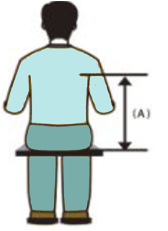
5. Backrest Height
Measure from the lowest point of the hips to the shoulders when seated. If a cushion is used, its thickness must be added.
(Users with poor muscle tone can subtract 7.6cm (3 inches) in height; users with good muscle tone can subtract 10cm (4 inches) in height.)
6. Distance between Footrest and Seat Cushion
This combines the length from the inside of the knee to the bottom of the foot, adjustable when the wheelchair is tilted.

7. Front Seat Height
Determined by the user: According to tire size and transfer method
Assisted by caregiver: According to the caregiver's convenient height
Outdoor use: The distance between the back of the footrest and the ground should be more than 5cm
8. Rear Seat Height
Needs to be determined in conjunction with the front seat height.
In a stable posture, the rear seat height should be approximately 2-3cm less than the front seat height.
9. Diameter of Front and Rear Wheels
Advantages of large diameter: easier to cross curbs and travel on soft surfaces like grass.
Advantages of small diameter: easier to make tight turns and travel smoothly on hard surfaces.
Wheelchair Size Quick Guide (16-inch vs 18-inch Seat Width)
Actual Wheelchair Seat Width Comparison (16" vs 18")
Many customers ask: What's the difference between a 16-inch and 18-inch wheelchair? The following diagrams use the same user to demonstrate the approximate feeling of sitting in a 16-inch (approx. 40–43cm) and 18-inch (approx. 46cm) wheelchair:
16-inch Seat Width Illustration

Approximately 1–2cm of space reserved on both sides of the hips, elbows naturally hanging, easier to propel oneself, suitable for petite women and Asian seniors.
18-inch Seat Width Illustration

Approximately 2–3cm of extra space on both sides, more suitable for tall, heavier users, or when a thick cushion is needed.
* Images are for illustration purposes only. Actual results may vary slightly depending on the user's body shape, posture, and cushion thickness. If you have any questions, please feel free to visit our store for a test sit.
Wheelchair Size FAQ (16" vs 18" Common Questions)
Q1. What part of the wheelchair do 16" / 18" refer to in wheelchair sizes?
A: Generally, 16" or 18" refers to the seat width, which is the actual usable width of the seat, not including the tires and armrest frame.
- Seat Width: Measure the widest distance between the left and right sides of the cushioned seating area (Figure 1). A usable seat width is 16 inches (40cm).

- Some manufacturers or lines measure from armrest to armrest as seat width (Figure 2) - Armrest to armrest is about 17.5 inches (45cm)

- Or from frame to frame (Figure 3), these numbers will be larger than the "seat width." Frame to frame is 18 inches (46cm).

- When choosing a size, prioritize "seat width"; other measurements are for reference only.
Q2. How can I easily understand the difference between 16 inches and 18 inches?
A: You can simply think of it as small size / large size, or "women's / men's" concept:
- 16 inches (approx. 40–43cm): Narrower size, suitable for petite Hong Kong women, weighing 40–70kg, and approximately 150–170cm tall.
- 18 inches (approx. 46cm): Standard adult size, suitable for taller, heavier users, weighing 60–100kg, and approximately 165–185cm tall.
* If your height and weight fall between the two sizes, it is recommended to prioritize comfort and the thickness of daily clothing. If necessary, you can try sitting in a wheelchair at our store before making a decision.
Q3. How do I measure "seat width" at home?
A: The method is similar to choosing clothing waist size:
- Sit on a hard chair, trying to keep your back straight.
- Use a soft tape measure to measure the widest part of your hips (including the clothing you normally wear).
- Then add about 2–3cm (approximately the thickness of a palm) for a little wiggle room.
- For example, if you measure 40–41cm, you would generally choose a 16-inch; if it's close to 44cm or more, an 18-inch is more commonly chosen.
Q4. What happens if I choose the wrong size?
A: If the seat width is too narrow:
- Increased pressure on the hips and skin friction, leading to a higher long-term risk of pressure sores.
- Will feel more cramped when wearing thick clothes in winter or using a seat cushion.
If the seat width is too wide:
- The person will not be able to sit stably, the midline is prone to tilting, and when pushing the wheels, the arms will be "too wide," making it difficult to self-propel.
- It will also be more difficult to control the overall width when passing through doorways and narrow spaces.
Q5. If I'm unsure whether to choose a 16" or 18" wheelchair, what should I do?
A: If any of the following situations apply, we recommend contacting our team or visiting our store for a test sit:
- The user has conditions such as scoliosis, pelvic asymmetry, amputation, or obesity.
- Needs to use a wheelchair for more than 4–6 hours daily for an extended period.
- Requires the use of thick cushions, pressure relief air cushions, or side cushions as assistive devices.
The Ho Ho Medical team can help you test sit and recommend the most suitable seat width and wheelchair model based on your height, weight, home doorway width, and care methods.
Related Articles
How to Choose a Manual Wheelchair (Detailed Explanation with Diagrams)
How to Use a Manual Wheelchair (Detailed Explanation with Diagrams)
Wheelchair Types and Functions Explained
#HoHoMedical #Wheelchair #ManualWheelchair #WheelchairSize #WheelchairSeatWidth
Last updated:
© 2026 Ho Ho Medical Supplies All rights reserved.
The content of this article is protected by copyright law. Please do not reproduce or plagiarize in full without written authorization. Violators will be prosecuted.